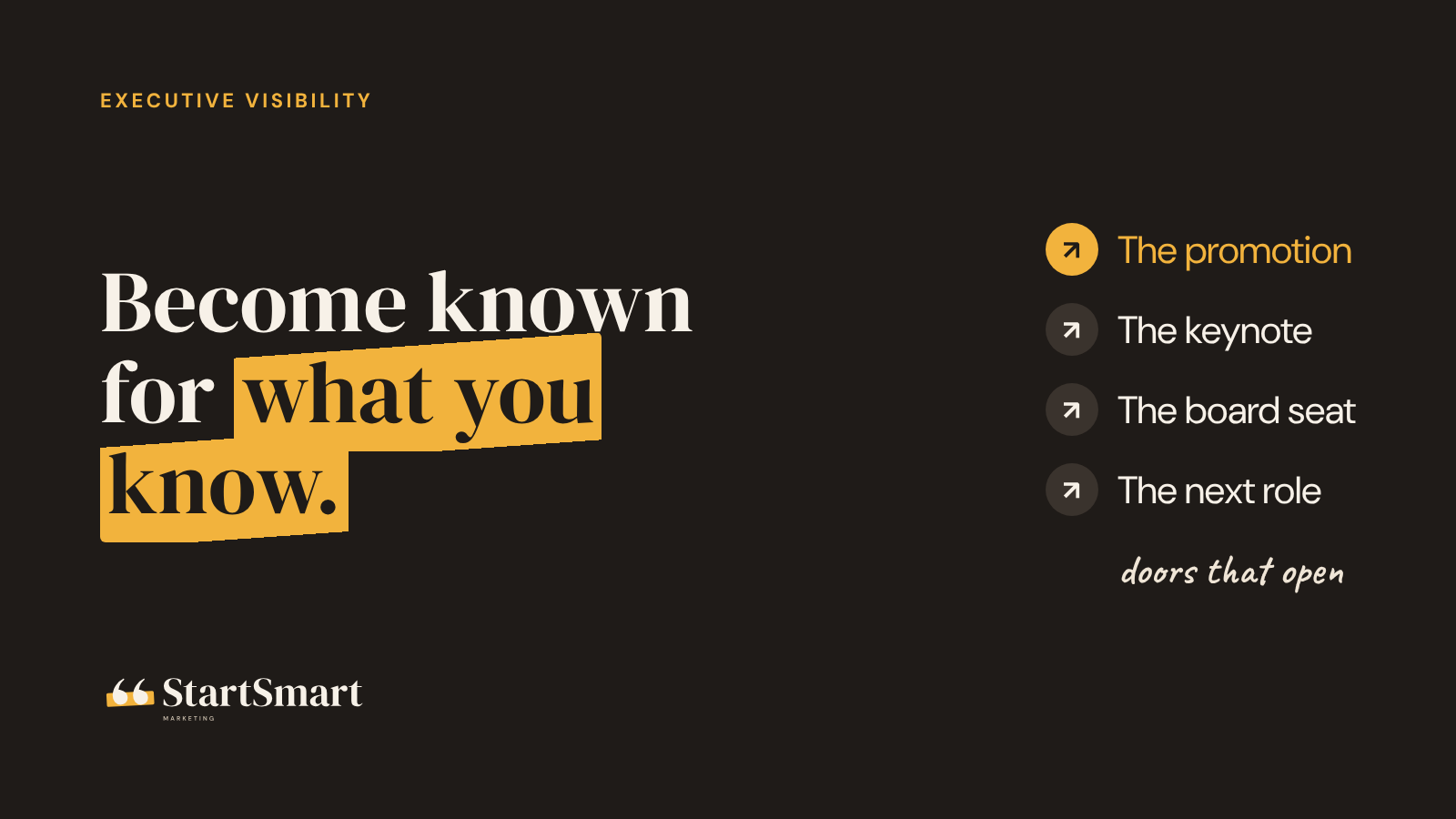
TL;DR: Executive visibility is how leaders become known for what they know, inside their company and far beyond it. It can open doors to promotions, speaking invitations, board conversations and your next role. You don't need to become an influencer. Pick a lane, share real stories in your own words and show up consistently.
There's a certain kind of leader I meet all the time.
They're brilliant at what they do. They've been doing it for 15 or 20 years. Their team trusts them, their clients rely on them and the people closest to them know exactly how good they are.
And almost nobody outside that circle has any idea.
Maybe they want that next promotion. Maybe they'd love to speak at the big industry conference, or be considered for a board seat, or have options when the next role comes along. But when the opportunity shows up, the person who gets the call is often the one people already know… not necessarily the one who knows the most.
Why great leaders stay invisible
I've thought about this a lot, and I don't think it's because leaders don't care. It's usually one of a few things.
They're too close to their own expertise. When you've done something for years, it stops feeling special. I see this in almost every interview I do:
"The person in these interviews is so close to the work that they can't hear the uniqueness of the stories anymore."
They don't know how to talk about it. Being great at the work and being great at explaining the work are two different skills.
"A lot of experts are extremely skilled in what they do, and they have a lot of years of experience in what they do. However, they don't know how to talk about it in a way that actually helps their marketing and sales efforts."
They think it's self-promotion. A lot of leaders, especially humble ones, worry that posting about their work will come off as bragging. I get it. But sharing what you know so other people can benefit from it is generous, not boastful.
What executive visibility can do for you
When a leader becomes known for what they know, a few things start to happen.
Inside the company, people understand your thinking before you walk into the room. Your ideas carry more weight. When leadership is deciding who's ready for more, you're already top of mind.
Outside the company, event organizers start coming to you. Partners and buyers trust your company because they trust you. Recruiters, boards and future employers can see how you think, not just what's on your résumé.
And for the company, your visibility is an asset. In one B2B firm I work with, the COO's posts have reached more than seven times as many people as the company page this year. (I share the details in executive thought leadership.)
How to build executive visibility without it taking over your life
1. Pick your lane. What do you know better than almost anyone, and who needs to hear it? Your lane might be how great teams run, how to lead through change or what's coming next in your industry. Narrow is good. It's how people remember you.
2. Make your LinkedIn profile reflect it. Your profile is your storefront. Update your headline and About section so they show your expertise and point of view, not just your job title.
3. Talk before you write. Most leaders come alive in conversation and freeze in front of a blank page. A recorded interview pulls out your stories, opinions and the phrases you naturally use. Then those become posts that actually sound like you. (Here's how a content interview works.)
4. Share real stories. A lesson from a hard quarter. A question a client asked that changed your thinking. A strong opinion about how your industry does things. People connect with how you think, so let them see it.
5. Show up consistently. One or two posts a week is plenty. Consistency matters far more than volume. If you're busy (and you are), get help keeping it moving, as long as the words still come from you. More on that in do you need a LinkedIn ghostwriter?
Your expertise deserves to be seen
I love this work because I love cheering people on toward their goals. Want more speaking engagements? Let's get you there. Want to build your personal brand for that next promotion or role? Let's do it.
You've already done the hard part. You've built the expertise. Now it's just about becoming known for what you know.
Frequently asked questions
What is executive visibility?
Executive visibility is how well-known a leader is for their expertise, both inside their organization and in their industry. It's built by consistently sharing real knowledge, stories and opinions, often on LinkedIn and through speaking.
Why does executive visibility matter for my career?
Visible leaders are more likely to be considered for promotions, speaking invitations, board roles and new opportunities, because the people making those decisions already know how they think.
How do I build my personal brand as an executive?
Choose a clear lane of expertise, update your LinkedIn profile to reflect it and share real stories and opinions consistently. Starting from recorded conversations makes it much easier.
Isn't posting about my work just self-promotion?
Sharing what you know so others can learn from it is generous. When your posts teach, tell real stories and offer a point of view, people experience them as helpful.
How much time does executive visibility take?
Less than you'd think. An hour-long recorded conversation every month or so can produce weeks of posts written in your own voice.
Want to become known for what you know? See how I work with leaders and B2B teams, or book a call.
Building your own business? Here's how a content interview works.