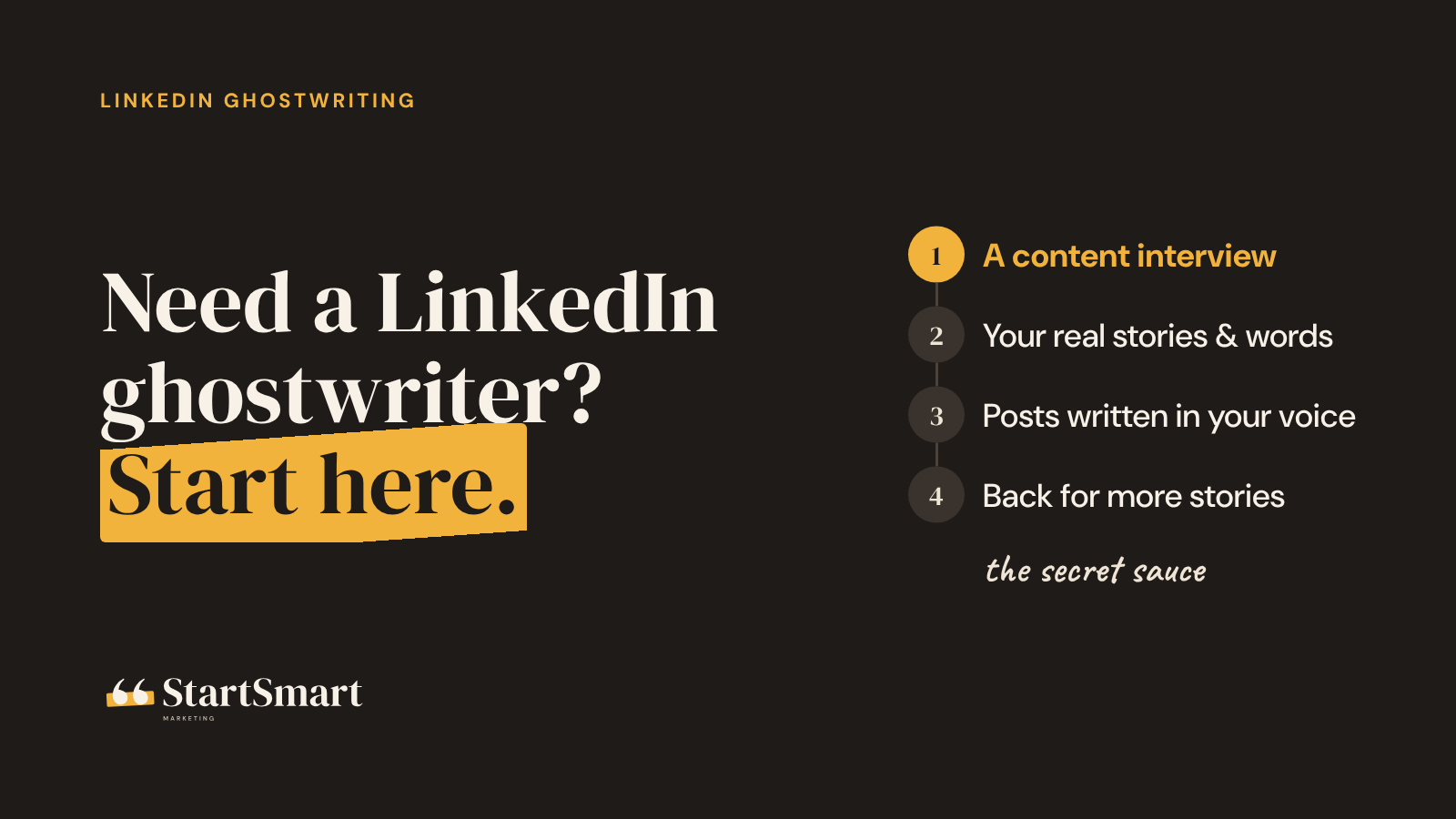
TL;DR: Hiring a LinkedIn ghostwriter makes a lot of sense when you're busy… but a ghostwriter can only write what they know about you. The secret sauce is a content interview: a real conversation where your stories, phrases and opinions come out, so every post sounds like you because it came from you.
I get this question a lot, usually from someone who's been meaning to post on LinkedIn for months: "Should I just hire a LinkedIn ghostwriter?"
And honestly? Maybe. There's nothing wrong with getting help. I write LinkedIn posts for my clients every single week. You're running a business or leading a team, and sitting down to write three posts a week is not where your time is best spent.
But here's the part nobody tells you before you hire someone… the writing is the easy part. The hard part is knowing what to write about, and making it sound like you.
Why so many ghostwritten LinkedIn posts sound the same
You've seen them. The posts that start with a one-line hook, list five lessons, and end with "Agree?" They're polished. They're perfectly formatted. And you could swap the name at the top for anyone else's and nobody would notice.
That usually happens when the writer never really got to know the person they're writing for. Maybe they got a short questionnaire, a LinkedIn profile and a few bullet points. So they fill in the gaps with general advice… or with AI. And the result is content that's technically fine and completely forgettable.
People can tell. I think we're all a little tired of generic, AI-sounding content right now. Your buyers want to hear from the real person who has actually done the work: your stories, your opinions, the way you explain things when you're on a client call.
And that stuff doesn't live in a questionnaire. It lives in your head.
The secret sauce: a content interview
Every content program I build starts with a conversation. I call it a content interview.
We hop on a recorded call (I use a podcasting platform called Riverside, which captures high-quality video and audio and gives me a transcript afterward), and I ask you about your business. How you got here. Why you love it. What your clients struggle with. What brings people to you. Client stories. The big, audacious thing you'd build if you could.
For you, it's just a conversation. But I'm listening for something different. While you're talking, I'm hearing "oh wait, that's content." A lot of times you'll say something and just keep going, and I'll stop you: "Wait, wait, hold on, let's go back to that. Can you tell me more about that?"
That's usually where the good stuff is.
"The person in these interviews is so close to the work that they can't hear the uniqueness of the stories anymore."
That's the real reason a content interview matters. You've told the same story to clients a hundred times, so it doesn't feel special to you anymore. Someone on the outside, asking good questions, can hear what you can't.
What happens after the interview
Before our first call, I send a short intake questionnaire. It gives me a starting point and helps you think through your answers, so the interview itself feels easy.
After the call, I go through the transcript and look for themes, stories, quotes and clips. What did you light up about? What was easy for you to explain, and what was hard? What phrases do you use without even thinking about it?
"I can pull the transcripts down to help me to write content that really looks and sounds and feels like you."
From there, I write your LinkedIn posts in your voice, using your real words wherever I can. Text posts, video clips cut from the recording, carousels, newsletters… one conversation can fuel months of content.
And then we go back for more. The first interview is great, but there are always nerves the first time. The second one is usually where it really starts to get good. We dig into the posts that resonated, the questions people keep asking and the client stories you've collected since.
Turning on your content radar
The clients I work best with don't just hand over their LinkedIn login and walk away. They want to learn this process.
So I teach them to turn on what I call their content radar: noticing the moments in their day that could become a story. Some of my clients will be driving home from a meeting, open up an email and do a "car ramble" for me… messy notes about something cool that happened or something they heard. I take that and help shape it into something worth sharing.
That's what keeps the content fresh. A ghostwriter working from one questionnaire runs out of material fast. A ghostwriter working from your real conversations never really does.
So… do you need a LinkedIn ghostwriter?
If you're busy, and you know you should be more visible, getting help with the writing can be a really smart move.
Just make sure whoever you hire starts with a conversation. Ask them how they'll get to know you. Ask where the ideas will come from. If the answer is a form and a few bullet points, you'll probably end up with posts that sound like everyone else.
If the answer is "we'll sit down and talk, and I'll keep coming back with more questions," that's a good sign.
Because becoming known for what you know only works if it's actually you people are getting to know.
Frequently asked questions
What does a LinkedIn ghostwriter do?
A LinkedIn ghostwriter writes posts that are published under your name. The best ones also help with strategy: what to post about, how often and how it connects to your business goals.
How do I make sure ghostwritten posts sound like me?
Start with a conversation. A recorded content interview captures your stories, opinions and the way you naturally explain things, so the writer can use your real words instead of guessing.
Is it okay to use AI for LinkedIn posts?
AI can help shape a draft, but it can't replace what you know. The content that works starts with a human, gets help in the middle and ends with a human making sure it sounds right.
How long is a content interview?
Usually 60 to 90 minutes. A few minutes to get comfortable, then a solid hour of conversation, which is enough to fuel months of posts.
How often should a ghostwriter interview me?
After the first interview, it helps to go back every few months to dig into what's resonating, capture new client stories and cover anything new in your business.
Want to see how a content interview works? Here's the whole process →
Founder or solo expert? The Starter Kit is one content interview, your messaging, your LinkedIn profile and three months of posts. See the Starter Kit →
Want this for the experts on your team? See how I work with B2B teams →